
Co-design workshop findings November 2025
What we heard
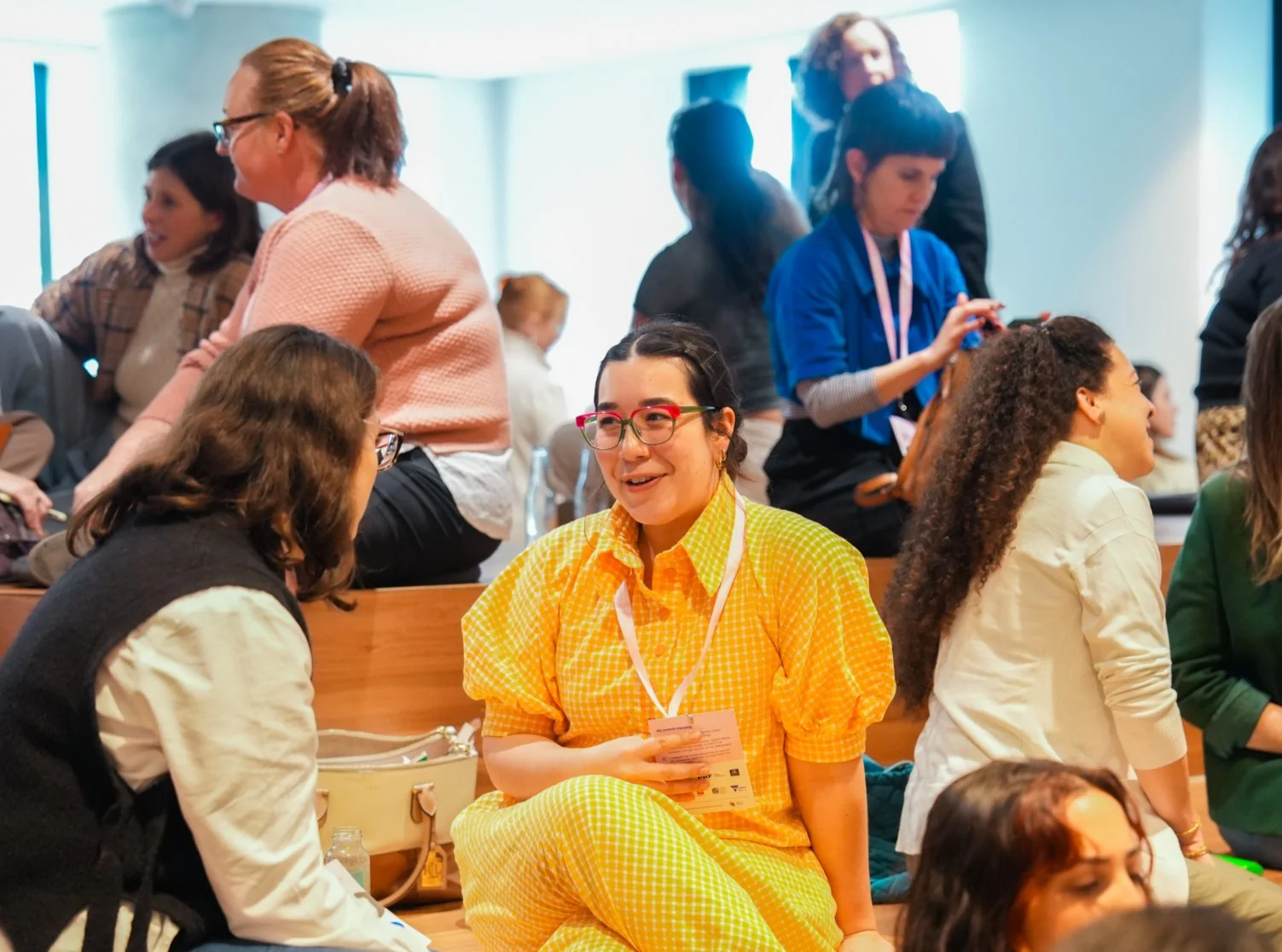
In November 2025, we brought people together from across the sector to explore findings from our recent survey, share ideas and deep dive into key topics.
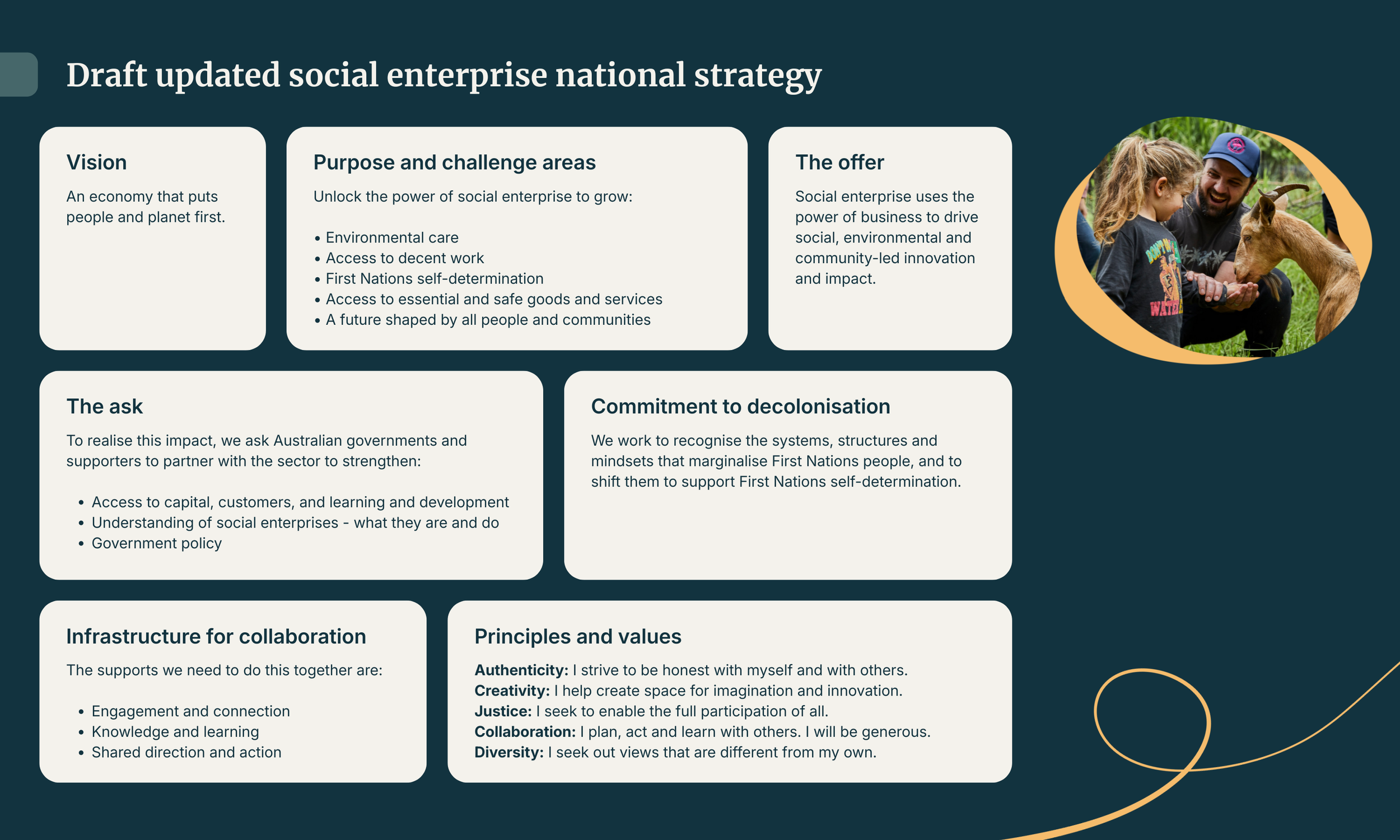
103 people attended the workshop. We shared the survey findings and a draft updated strategy based on them (see below). Participants responded to the draft updated strategy, shared and discussed ideas for potential goals, and shared the action they want to take. Ideas and input were gathered via live polls, the chat function and workshop notes.
Feedback on draft updates
Direction
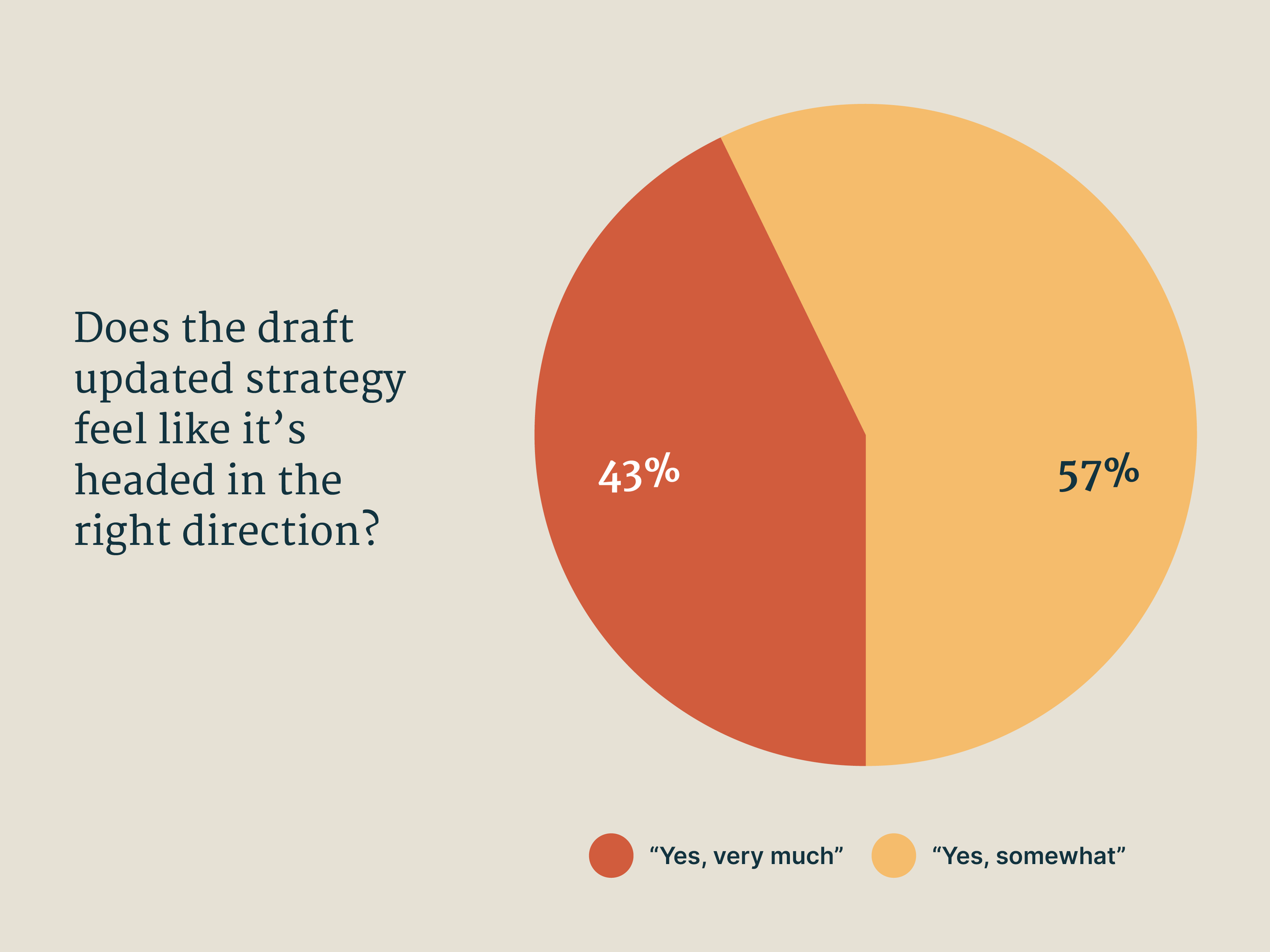
We asked participants via poll if the draft updated strategy feels like it’s headed in the right direction. All - to different degrees - felt the strategy is on the right track.
43% said “yes, very much”
57% said “yes, somewhat”
0% said “no”
The key themes that emerged were:
People strongly supported the shift in vision to “an economy that puts people and planet first”. It resonated as clearer, bolder and more grounded than the previous vision
Many welcomed the addition of First Nations self-determination as a standalone challenge area; they said the updated commitment to decolonisation better reflects the work ahead and aligns with the need to confront power, not just “value” culture
The direction feels more ambitious and better tied to the specific transformations people want to contribute to.
Strength of case to support the sector
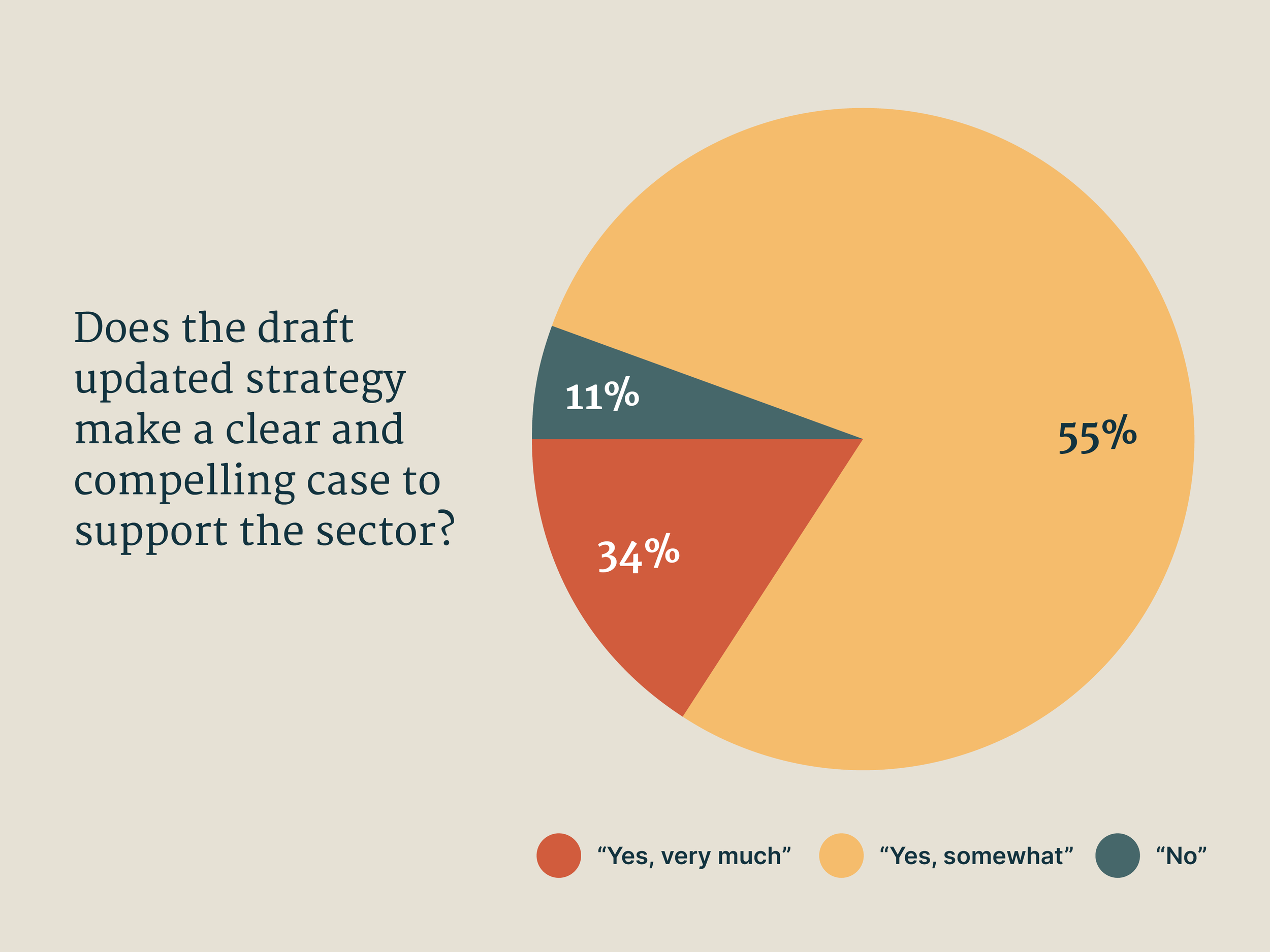
We asked participants if the draft updated strategy makes a clear and compelling case to support the sector.
34% said “yes, very much”
55% said “yes, somewhat”
11% said “no”
The key themes that emerged had participants call for:
Clearer explanations of the challenge areas
A simpler structure with a clearer logical flow
Plain English
A clearer story about what problem the strategy is solving
A clearer definition of social enterprise and its unique value
The strategy to show how social enterprise contributes to system-level change
Evidence, lived experience and examples - several said the strategy could go further to connect big ideas to on-the-ground realities.
Cuts
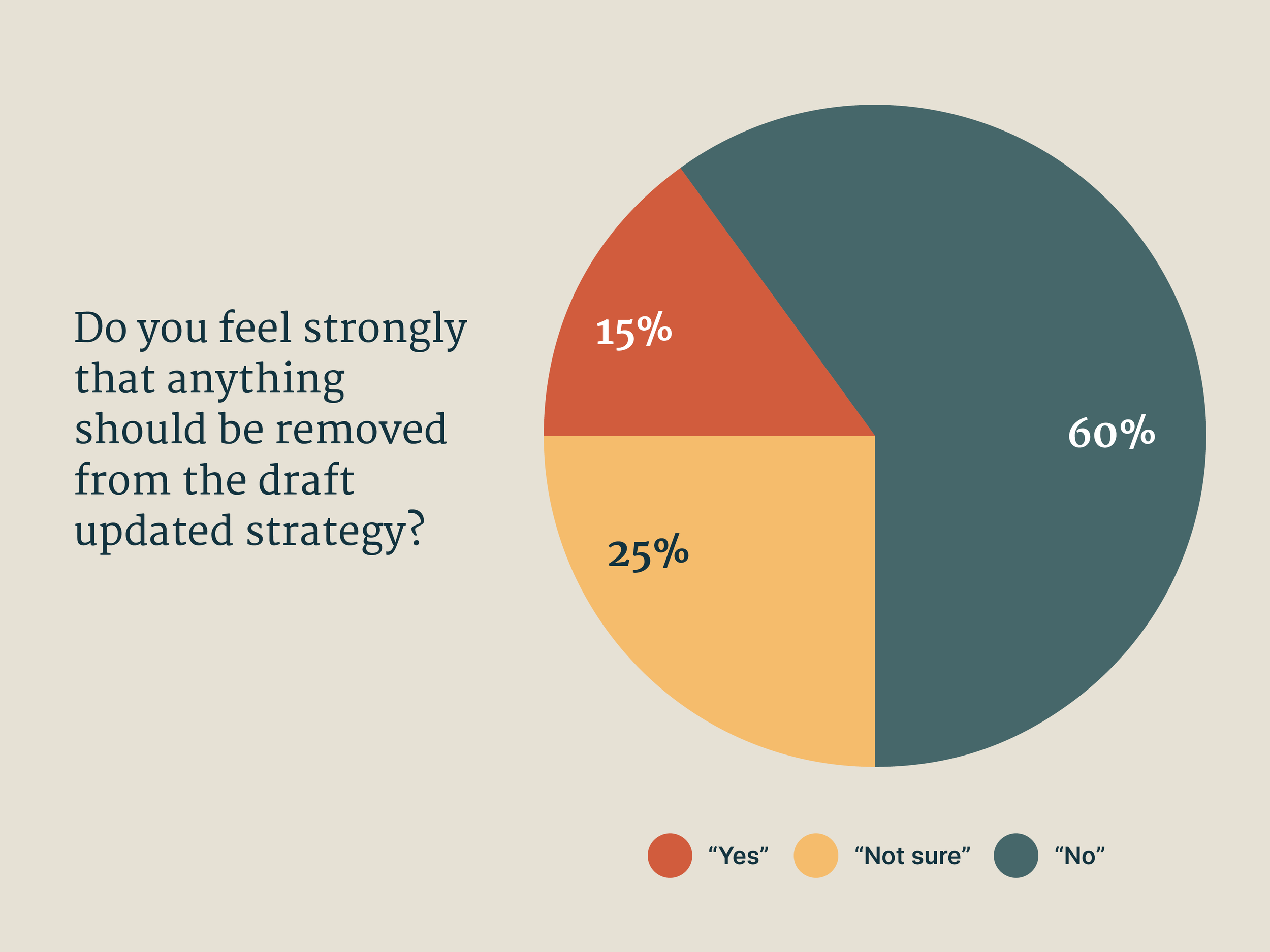
We asked participants if they felt strongly that anything should be removed from the draft updated strategy.
15% said “yes”
25% said “not sure”
60% said “no”
The key cuts that emerged were:
Be shorter and tighter rather than comprehensive
Reduce sector jargon and overlapping content
Two people wanted the commitment to decolonisation removed, and one wanted it reframed as First Nations equity.
Additions
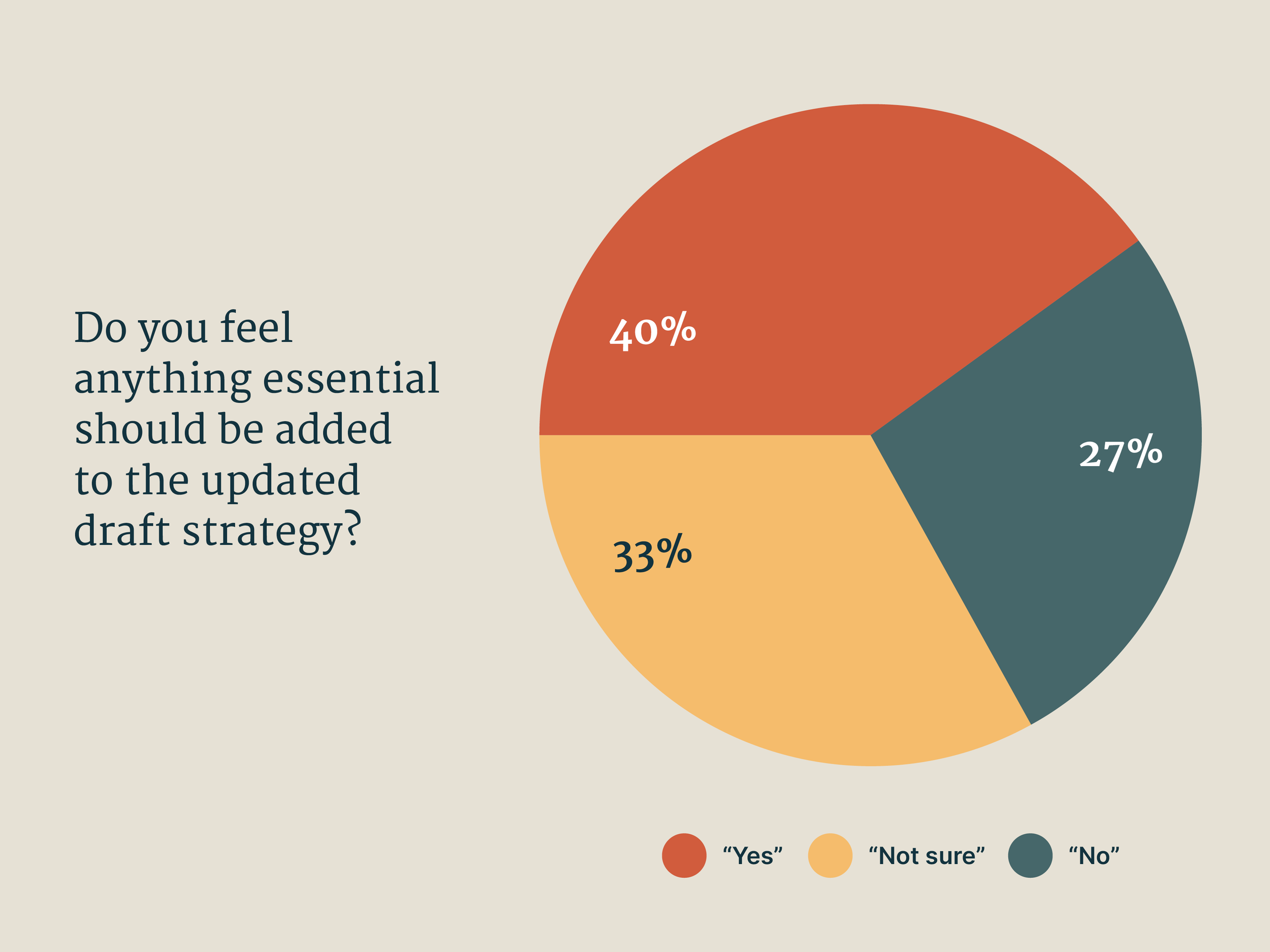
We asked participants if they felt anything essential should be added to the draft updated strategy.
40% said “yes”
33% said “not sure”
27% said “no”
The key additions that emerged were:
A clear line from ambitious vision to practical action, including pathways to take part
Be more explicit about how the strategy will shift conditions for social enterprise
Specific goals the strategy is working towards
A clearer definition of social enterprise and its unique value
Greater focus on market access, particularly access to a range of customers
Reference to place-based approaches, to support equity and local economic change
More attention to financial sustainability.
Potential goals
Participants moved into eight breakout groups and were asked to respond to the prompt: “If our vision is an economy that puts people and planet first, and we want to unlock social enterprise’s contribution to that, what needs to change for this to happen?”
Each group made shared notes. These were analysed and grouped into key themes.
Systems that value and scale social enterprise impact
Across groups, the strongest theme was that social enterprise contribution is currently limited by structures that do not value or incentivise social or environmental impact. Participants said goals should reflect:
Recognition of social enterprise
Capital and customers that reward impact and long-term value
A system that enables social enterprises to grow, replicate or scale where appropriate
Policy settings that reduce barriers to growth.
First Nations leadership and self-determination
Participants supported the inclusion of First Nations self-determination as a challenge area and said the related goals must:
Be designed with First Nations people
Centre economic justice, rights and power-shifting, not cultural recognition alone
Include mechanisms for ongoing self-determination in governance, resource allocation and place-based decisions.
Access to capital, customers and development
Participants identified access as key to unlocking social enterprise potential. Suggested goals included:
Fair access to working capital, investment and early-stage funding; participants emphasised that access must be broad and include rural, regional, remote and culturally and racially marginalised communities
Greater ability for social enterprises to reach customers through procurement reform, intermediaries and visibility
Learning and development that builds on strengths and broad experience rather than “fixing deficits”.
Community power and participation
Many groups said the strategy should commit to goals where:
Communities shape decisions that affect them
Social enterprise strengthens local resilience and participation
Community-led innovation is resourced with flexibility and trust
Community power is not a “program” but voice, ownership and decision-making.
A more enabling environment
Participants said the strategy must aim for:
Shared learning, data and evidence so the sector can understand its impact in real time
Stronger public will for social enterprise, built through storytelling, evidence and visibility
A connected ecosystem, not isolated organisations
Collaboration that shares power, especially with under-represented groups and place-based actors.
The action people want to take
We asked participants via live poll what action they would like to take towards these goals.
Free-text responses were analysed and grouped into key themes.
Contributing to implementation
Many participants wanted to move quickly from strategy to action. People said they do not want the strategy to sit on a shelf, and expressed a desire to act together on it. They expressed interest in:
Working groups focused on specific challenge areas, such as access to decent work
Collaborative efforts to pilot new models, such as outcome payments or place-based procurement
Helping shape the early phases of implementation once the strategy is finalised.
Policy and advocacy
Participants said they wanted to be part of:
Coordinated advocacy that is broadly shaped, uses shared language, and aligns on key challenges and priority asks, without homogenising
Advocacy that makes space for many voices, especially those closest to impact, and is upfront about whose voice is being used and when
Making the sector more visible and understood
Coordinated campaigns
Contributing sector evidence and stories to influence governments and markets
Advocating for procurement reform.
Strengthening the ecosystem
Many spoke about the conditions around social enterprises needed to deliver impact. They want to contribute time, insight and leadership to build the ecosystem itself. Participants expressed interest in:
Collaborations that connect effort and share power, such as challenge-area working groups or place-based initiatives
Efforts to grow public understanding of what social enterprises do
Work with others to create better access to capital, finance and procurement
Building shared learning and evidence.
Learning, development and peer support
Participants said they want to:
Learn in ways that are practical, reciprocal and led by those with lived and local experience
Take part in learning communities, peer networks and mentoring
Share practice and learn across different contexts (urban, regional, remote)
Co-develop tools, templates and shared resources.
What’s next
The survey and workshop represent the first steps to strengthen the national strategy. Thank you to all who made time to share your ideas and experiences.
An ambitious roadmap to unlock the power of social enterprise can only work if it is sector-led.
To finalise the updated strategy, the steps from here are:
Pulse check (short survey) in March 2026 - an opportunity to share your views on the draft updated strategy incorporating insights from all previous steps.
A vote in April 2026 - Social Enterprise Australia Members will discuss and finalise the updated strategy at our Members Meeting.