

National strategy survey October 2025
What we heard
In October 2025, we ran an open-invite survey to hear views on the current social enterprise national strategy and ideas to strengthen it.
Who participated?
215 people participated in the survey. Participation was diverse.
Most came from social enterprises (72%), followed by capability builders (19%), professional services providers (9%), and peak bodies (8%). Others, in decreasing order, came from networked initiatives, higher education institutions or RTOs, governments, market connectors, philanthropic organisations, corporates, research centres, financial intermediaries and impact investors.
Respondents worked in every state, territory, and region. Many had staff and/or customers in NSW (56%) and Victoria (52%), followed by Qld (41%), the ACT (25%) and WA, SA, NT, Tas, and outside Australia. They also had staff and/or customers in a mix of metropolitan (87%), regional (57%), rural (33%) and remote (25%) areas.
They focused on different impact areas, including community-led innovation (54%), people-centred services (48%), access to decent work (41%), and environmental care (26%).
12% of respondents came from Aboriginal and/or Torres Strait Islander owned (majority-controlled) organisations, 87% did not, and 1% chose not to say.
Vision
Current vision
Working together to ensure all people, places and the planet thrive.
Views and ideas
We asked respondents if the current vision still felt relevant, specific and inspiring.
45% said “yes”
48% said "in part"
7% said "no"
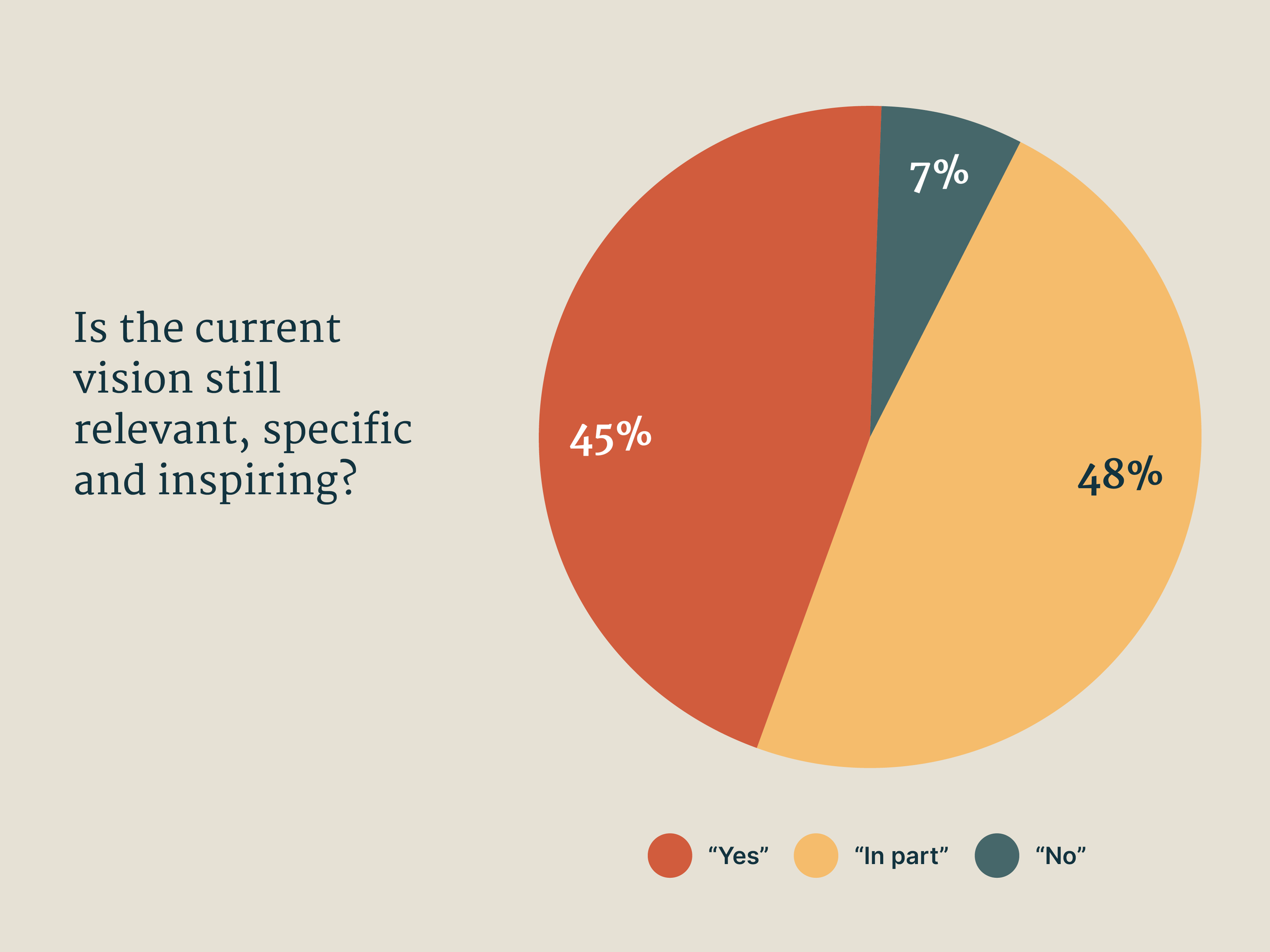
The key themes that emerged from 192 comments and ideas on the vision were:
Economic transformation - the vision should be framed around the type of economy we're building; the most common suggestion was “an economy that puts people and planet first” and others suggested “a social and solidarity economy” or “a wellbeing economy”
Too generic - the vision could apply to many sectors or organisations; many felt it needs to speak more specifically to social enterprise
“Places” is unclear - there were questions about what “places” means or adds, with some suggesting it is redundant alongside “people and planet” while others (particularly regional and remote respondents) wanted it to mean or say “communities”
Explicitly name social enterprise - some wanted the term “social enterprise” in the vision and felt it should name our role, not just describe the outcome
“Working together” is process, not vision - some noted that “working together” describes how we work, not where we're headed.
Purpose and challenge areas
Current purpose and challenge areas
Foster a vibrant and connected Australian social enterprise sector that provides:
Environmental care
People-centred services
Access to decent work
Community-led innovation
Views and ideas
We asked respondents if the current purpose and challenge areas still felt relevant, specific and inspiring.
59% said “yes”
37% said “in part”
4% said “no”
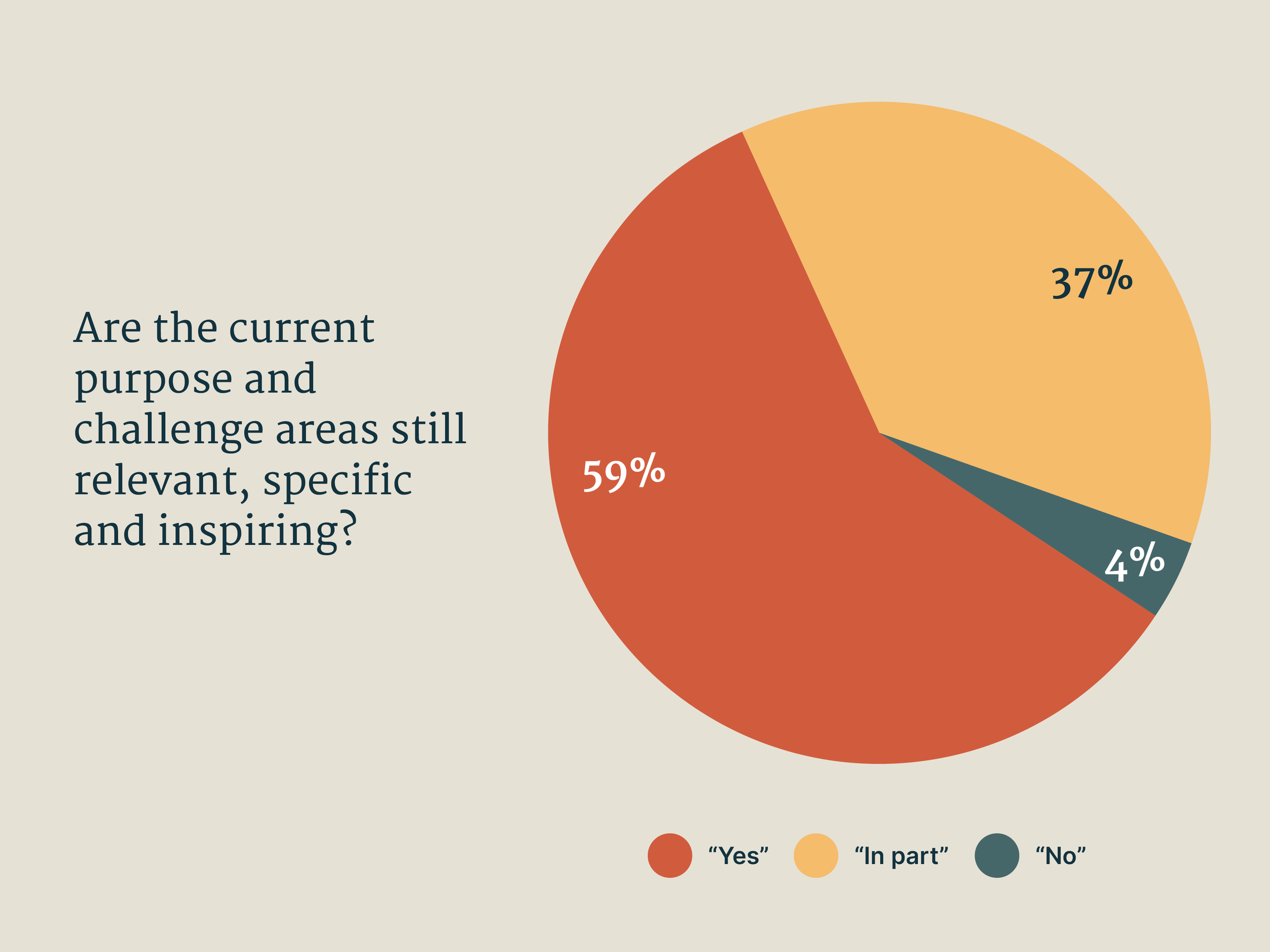
The key themes that emerged from 159 comments or ideas on the purpose and challenge areas were:
Greater clarity needed - many said the challenge areas need clearer definitions, particularly “people-centred services” and “community-led innovation”
Access to decent work - most found this clear and self-explanatory, it was particularly clear to jobs-focused social enterprises
Environmental care - most found this clear, though some felt “care” was too passive and suggested “regeneration” or “action”
People-centred services - many requested clarification, and some said it could sound paternalistic
Community-led innovation - many wanted it to be clearer, with some asking whether it was about innovation by communities or for communities, and some noting it overlaps with other areas
“Fostering” feels passive - respondents suggested stronger verbs like “building”, “strengthening”, “driving” or “unlocking”
First Nations self-determination - many called for First Nations self-determination to be named as a distinct challenge area: this was particularly strong among First Nations respondents, with some noting that reclaiming stolen power is not captured by “community-led innovation”
More transformation - many wanted the purpose to reflect deeper transformation; others called for explicit language around justice, equity and reshaping the economy.
What’s needed to drive impact in challenge areas?
When asked what is needed to enable social enterprises to drive impact, respondents identified clear needs across all challenge areas.
Environmental care - pricing/charging for environmental harm; and for organisations to use their purchasing power or procurement processes to consider, value and generate positive environmental impacts.
Access to decent work - for social enterprises to be paid for the value or savings of the employment outcomes they create. To support choice and fairness; many who said this also noted that payments should not go via a single intermediary or delivery pathway.
People-centred services - adequate funding that covers true costs.
Community-led innovation - funding for community-led approaches; with many emphasising trust and flexibility.
The offer - the impact potential of social enterprise
Current offer
Social enterprise combines the power of business to test and scale new ideas with a compass of public good. This makes it a key tool for social, environmental and community-led innovation and impact.
Views and ideas
We asked respondents to what extent they agree with the current offer.
33% strongly agreed
51% agreed
8% disagreed
8% strongly disagreed
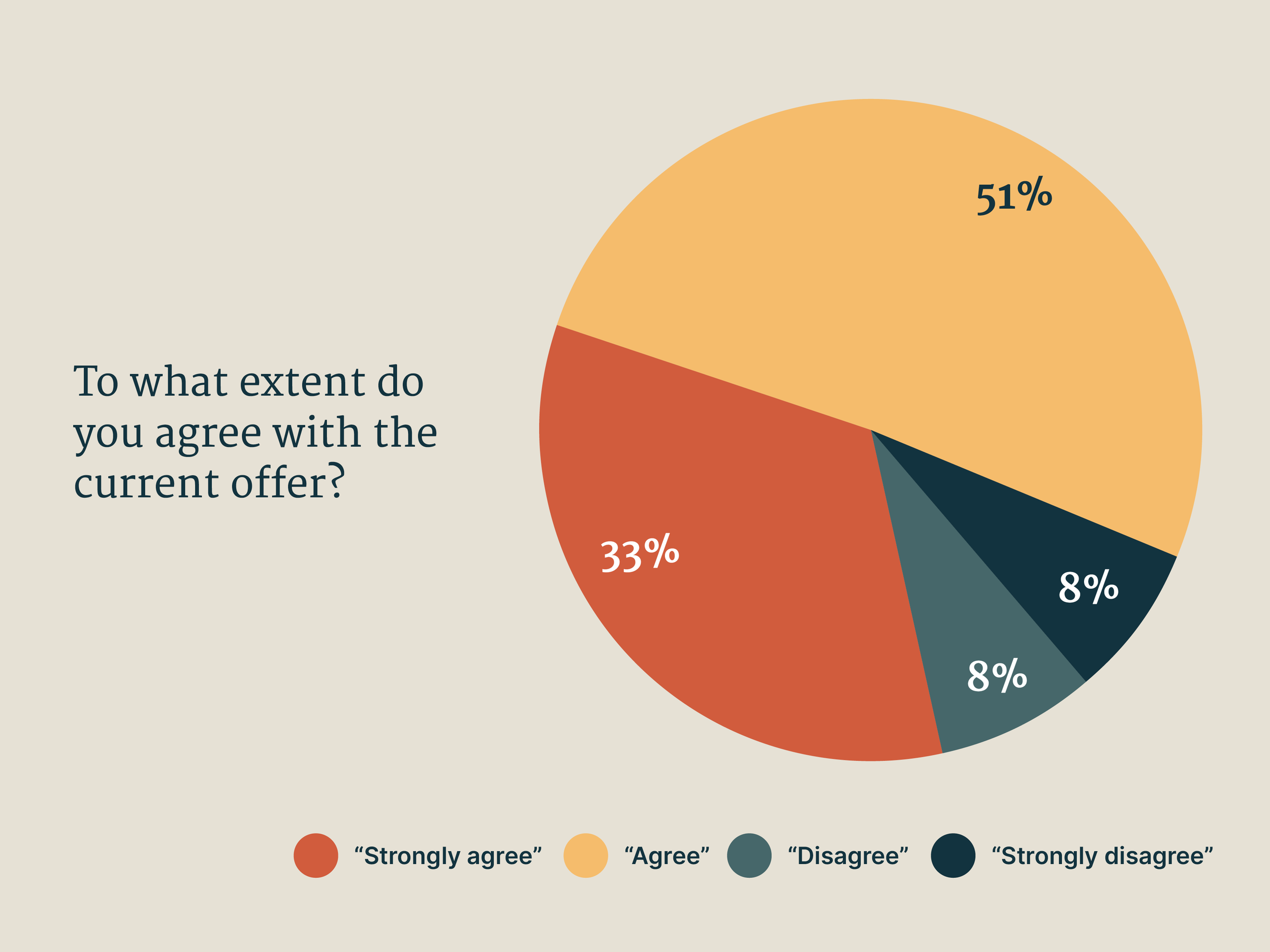
The key themes that emerged from the 89 comments or ideas on recommended changes to the offer were:
“Test and scale new ideas” is limiting - this phrase was highly critiqued; many (particularly jobs-focused social enterprises) noted that social enterprises don’t only test and scale new ideas, they also deliver impact
Emphasise the business model - a clearer articulation of what makes social enterprise different as a business model
“Compass of public good” needs clarification - many found this phrase unclear or weak, this was particularly common input from First Nations organisations.
The ask - what’s needed to unlock social enterprise potential
Current ask
To unlock the impact of social enterprise, we ask the Australian Government and supporters to partner with the sector to design, roll out and evolve:
Access to capital, social procurement, payments for outcomes, and capability building
Supporting identification and evidence
Enabling government policy.
Views and ideas
We asked respondents to what extent they agree with the current ask. We asked them to choose one option from a list.
45% strongly agreed
46% agreed
4% disagreed
5% strongly disagreed
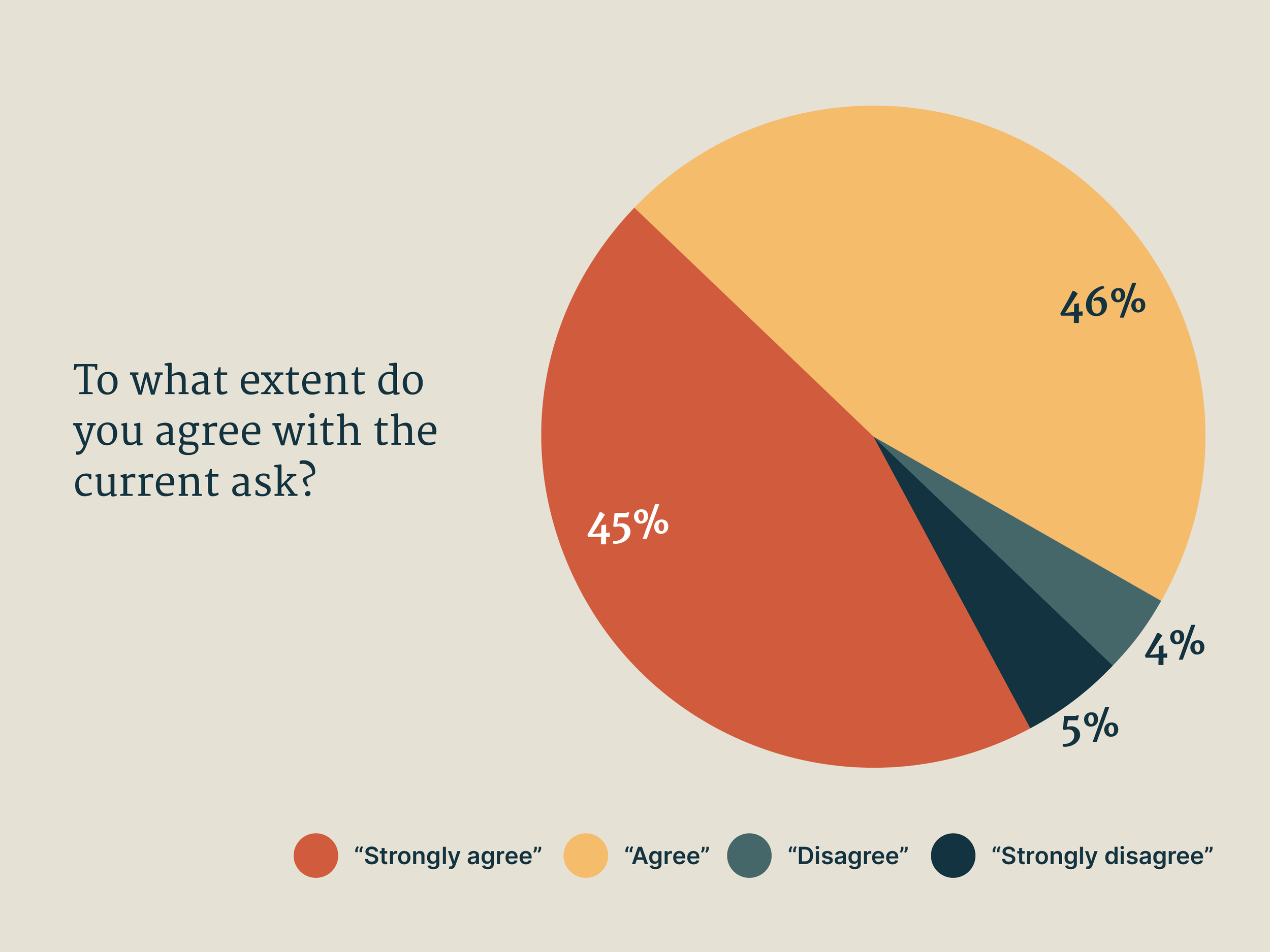
The key themes that emerged from the 88 comments or ideas on recommended changes to the ask were:
Broaden beyond the Australian Government - many wanted state/territory governments included and some wanted supporters named. This was particularly strong among regional and remote respondents.
Focus on needs, not mechanisms - many said the strategy’s “ask” should focus on underlying needs not specific mechanisms. They said that needs stay the same even as mechanisms change, so we should talk about things like “access to customers” or “access to capital” rather than naming tools like social procurement or payments for outcomes.
Focus on mechanisms - a smaller group wanted the strategy to name specific mechanisms, to make the ask more practical and easy to act on. The most common suggestion was for outcome payments linked to employment results. This view came up most often from jobs-focused social enterprises, some of whom highlighted the risks of relying on a single intermediary or delivery pathway. They noted this can limit choice and fairness and create a single point of failure. Some said enterprises should be able to access payments directly or have choice.
Replace “capability building” - many pushed back on this phrase as “deficit-based language”. Alternatives suggested included “learning and development”, “knowledge sharing”, “strengthening practice” and “two-way learning”. This was particularly common input from First Nations respondents.
How this is advocated for matters - some said both individual and collective advocacy are important. They highlighted that organisational advocacy should not be presented as representing the whole sector, and that the sector needs a broadly shaped, coordinated voice that reflects the diversity of social enterprises.
Social enterprise identification
We asked respondents if there are circumstances where a social enterprise could receive less than 50% of its income from trade and still be considered a social enterprise. For this question, it was stated that “trade” means selling goods or services, including results-based contracts that attract GST. It does not include gifts or donations that do not attract GST. The key themes that emerged from the 122 responses were:
50% trade is core to identification - many said that trade should stay central to what makes a social enterprise. Most felt that the “50% from trade” guide helps keep the identity of social enterprise clear and distinct. Some wanted a higher threshold. Two opposed a 50% threshold.
Focus on underlying business model - many said the definition should focus on the ongoing business model. A large one-time donation, grant, bequest or capital raise shouldn’t change whether an organisation is a social enterprise, because these do not show how the business sustains itself over time. Many said that capital raises to start up, grow, or to pivot a business are different from operating income, and should not be counted in the 50% calculation.
A strict definition - a smaller group preferred to keep the definition firm. They were concerned that too much flexibility could water down the concept of social enterprise and make the sector harder to explain or measure.
Timeframes not the best caveat - many felt five years isn't always appropriate and that rigid timeframes are not the best caveat.
Context matters - some raised contextual considerations, including geography, sector and market conditions.
What counts as “trade”? - most agreed that the definition of trade was broadly accurate and useful, covering the sale of goods or services, including results-based contracts that attract GST, and excluding gifts or donations. Some asked for guidance on grant-labelled contracts that function like trade, emphasising that how payments operate in practice matters more than the label.
The rest
We shared that we think the remaining parts of the current strategy - values and principles, infrastructure for collaboration, and commitment to decolonisation - serve well at this point in time. In case we are wrong, we asked respondents to read them and share any feedback.
Current values and principles
Authenticity: I strive to be honest with myself and with others.
Creativity: I help create space for imagination and innovation.
Justice: I seek to enable the full participation of all.
Collaboration: I plan, act and learn with others. I will be generous.
Diversity: I seek out views that are different from my own.
Views and ideas
Strong support - many expressed support for the current values and principles.
Connect to action and learning - Many wanted values and principles connected to action, reflection and learning.
Replace “authenticity” with “bravery” - a small number suggested this change.
Current commitment to decolonisation
We work to recognise the systems, structures and mindsets that marginalise First Nations people, and to shift them to value First Nations ways of being and doing.
Views and ideas
Strong support - respondents strongly supported the current commitment to decolonisation, noting it aligns with broader movements for justice and self-determination.
Connect to action and learning - many emphasised the need for concrete actions, reflection, and learning, and a clearer link to the challenge areas.
Connect to self-determination - most First Nations respondents highlighted that decolonisation is about self-determination, not just valuing First Nations ways of being and doing.
Current infrastructure for collaboration
Social Enterprise Australia will build momentum and infrastructure for:
Engagement and connection: It will provide pathways for people to engage and co-create around place, mission and sector development. It will connect existing collaborations and activities and facilitate new ones that the sector sees as critical, including cross-sector and global initiatives. These will inform shared direction and action.
Knowledge and learning: It will provide ways to share and learn about social enterprise and evolve to meet the interests and needs of the sector. This will include capturing data and knowledge from the sector and shared evaluation. It will be done to enable real-time understanding of practice and impact and to support decision-making.
Shared direction and action: It will lead a national strategy and work with others to build public will, advance policy, grow markets, and mobilise resources. These functions will be co-owned and shaped by all who support the vision, mission, values and principles of the sector.
Views and ideas
Strong support - respondents broadly supported the current infrastructure for collaboration, highlighting its importance for connecting the sector, reducing duplication and strengthening shared impact.
Power-sharing must be explicit - many said that infrastructure for collaboration needs to share power, not reproduce existing power imbalances, support different types of social enterprises, and involve many in the sector in planning, decision-making and implementation.
More concrete - some wanted clearer guidance on what this infrastructure includes, who it serves and how it operates in practice.