
May 2026 news
The federal budget dropped last night. When it comes to social enterprise, and in the context of two other federal decisions, it signals steady support.
In the budget, the Economic Pathways for Refugee Integration (EPRI) program was extended by 12-months, with a $7.7 million commitment. EPRI is a trailblazing initiative of the Department of Home Affairs. It funds social enterprises to create employment opportunities for refugee and humanitarian entrants facing significant barriers to work.
The program was due to end in June 2026.
This should come as no surprise. From commencement in 2023 to late 2025:
more than 3,300 refugee and humanitarian entrants engaged in the program
more than 1,100 sustained 26 weeks of part-time or full-time work
more than 900 transitioned to open employment
A government-commissioned evaluation of the program found that without EPRI, or a program like it, refugee and humanitarian entrants lack the support needed to fully realise their economic potential.
This is an important recognition of what works: targeted, participant-led employment pathways that create opportunity, dignity, and long-term workforce participation outcomes.
Huge congratulations to EPRI participants for their determination, commitment and resilience in overcoming systemic barriers to economic and social inclusion every day. We recognise your hard work and valuable contributions to Australian society.
And congratulations to social enterprises, employment and settlement supports, and government stakeholders who have contributed to EPRI and to tonight’s announcement.
In the year ahead, we look forward to working with all involved to design the future of EPRI. And an announcement in next year’s budget that moves beyond extension, to an enduring EPRI.
As it should be.
And a big shout out to the social enterprises delivering EPRI: Brotherhood of St Laurence, CERES Fair Wood, Civik People, Community Corporate, Dismantle (and partner, Loop Upcycling), Green Collect (and auspiced partner, the Dragonfly Collective with Value Nation), Green Yakka, Multicultural Youth SA, Nundah Community Enterprises Cooperative, Parliament On King, Plate it Forward, Social Engine, STREAT, Space2b Social Design, The Bread & Butter Project, The Social Outfit, The Social Studio, Thrive Refugee Enterprise, Vinnies NSW, and Whittlesea Community Connections.
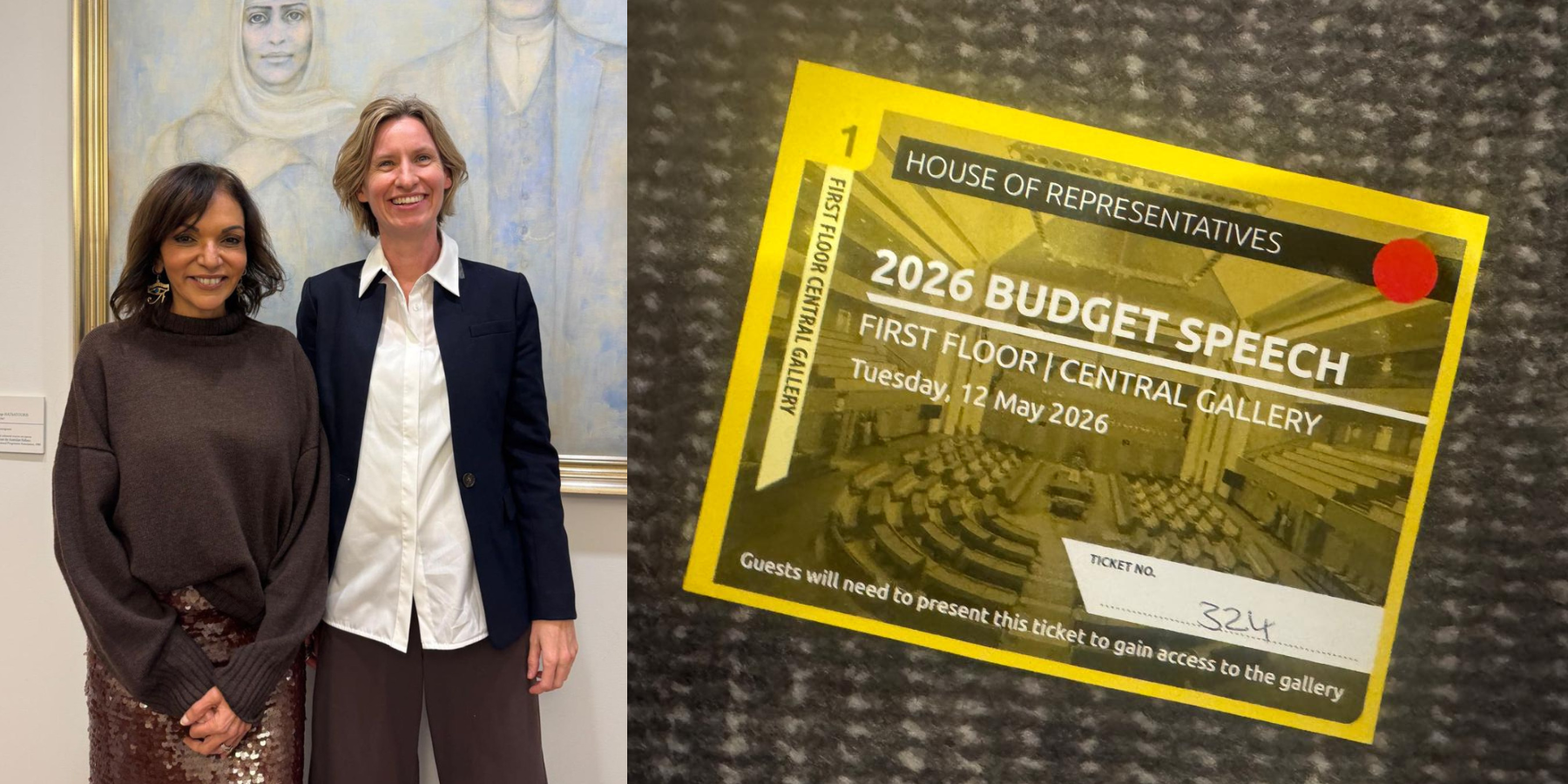
Image: With The Hon Dr Anne Aly MP, Minister for Multicultural Affairs, discussing EPRI.
The budget also confirmed the status of the Outcomes Fund.
The Australian Government previously committed $100 million over 10 years to tackle entrenched disadvantage, with a focus on focuses on families and children, people facing or experiencing homelessness, and people facing barriers to employment. The fund makes payments to service providers and social enterprises for outcomes, both directly and through payments to state and territory governments.
So far, $18.8 million has been committed to projects in New South Wales, Victoria and South Australia.
We look forward to working with governments, social enterprises and communities to make the most of this investment, and to more access to funding for social enterprises and service providers that create value and savings for government and communities.
🙌 Importantly, the budget arrived hot on the heels of two federal decisions that value social enterprise:
To extend and expand the Social Enterprise Development Initiative (SEDI). SEDI was due to end in June this year, but existing parts have been extended for a further 12-months with an additional $3.4 million, plus $3.3 million to support First Nations social enterprises. Social enterprises need to continuously develop their practice and capability, and SEDI supports this through capability-building grants to social enterprises, and online sector-wide education, learning and connection.
To release a Request for Quote for National Social Enterprise Sector Research: The research is to “establish an aggregated baseline dataset of the social enterprise sector and build the relational and data infrastructure for a comprehensive replicable dataset in the longer term”. We have long called for this. Current data on the Australian social enterprise sector is inconsistent, outdated and fragmented or hidden. This limits decision-making and support.
A huge thank you to all who contributed to these developments, to the social enterprises doing the work, to the organisations that support, research, fund and advocate for them, and to those in government making this support happen.
And onwards to a federal government strategy for social enterprise, one that maps onto the sector’s own strategy for social enterprise impact.
Best,
Jess Moore
CEO, Social Enterprise Australia